


- Wet Underfloor Heating
- Wet UFH Packs
- In Screed UFH Packs
- Timber UFH Packs
- Uponor Minitec UFH Packs
- Accessories
- Pipe
- Manifolds
- Spares
Wet Underfloor Heating
- Electric Underfloor Heating
- Radiators
- Thermostats & Controls
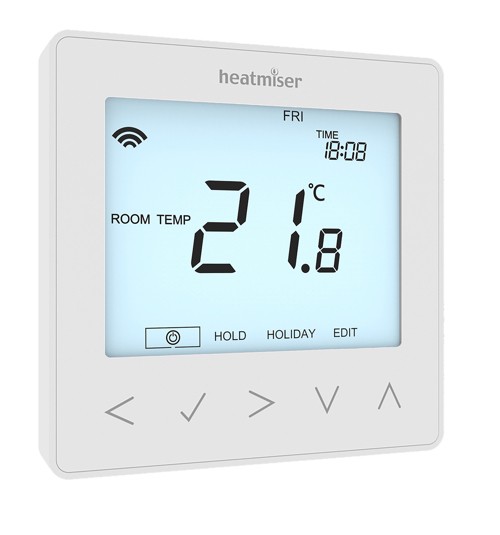
Thermostats and Controllers
- Heat Pumps
- Pre-Insulated Pipe
- Uponor Ecoflex Thermo VIP Single & Twin Pre Ins Pipe
- Uponor Ecoflex Thermo Mini & Single Pre Insulated Pipe
- Uponor Ecoflex Thermo Twin Pre Insulated Pipe
- Ecoflex Thermo HP Connection Pack with Pipe
- Uponor Ecoflex Thermo HP Twin Pipe
- Uponor Ecoflex Aqua Pre Insulated Pipe
- Uponor Ecoflex VIP Aqua Single & Twin
- Uponor Ecoflex Supra Pre-Insulated Pipe
- Uponor Ecoflex Quattro Pre Insulated Pipe
- Uponor Ecoflex End Caps
- Uponor Ecoflex Couplings
 Uponor Pre-Insulated Pipe
 - Spares

How to Choose the Right Radiator for Your Space
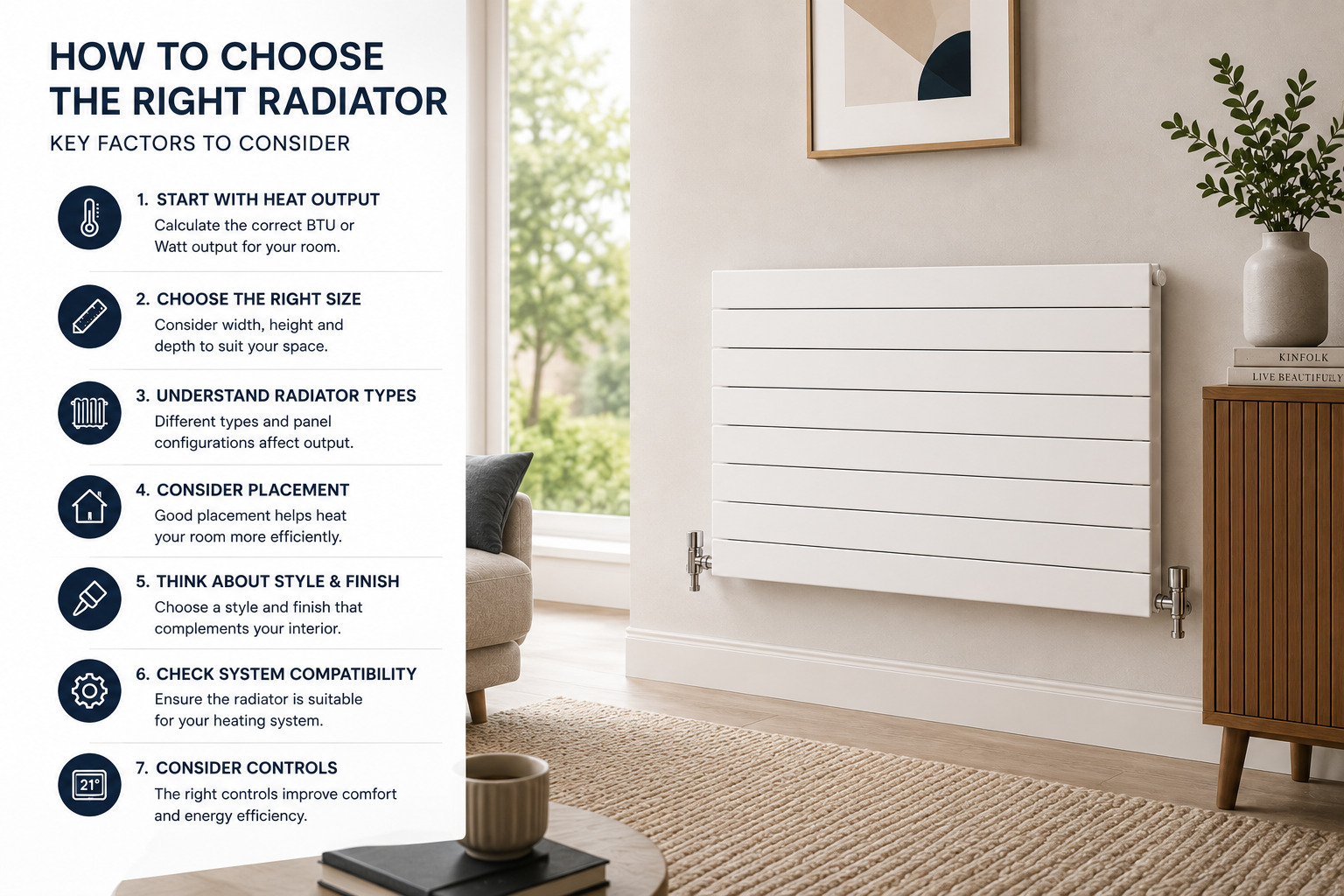
How to Choose the Right Radiator for Your Space
Choosing the right radiator is about more than simply finding a style you like. The best radiator for your space should provide the right heat output, fit comfortably within the room, and complement your interior design.
Whether you’re a homeowner upgrading your heating or an installer specifying radiators for a project, this guide covers the key things to consider before choosing a modern radiator.
1. Start with Heat Output
The most important factor when choosing a radiator is making sure it can produce enough heat for the room. Heat output is measured in BTUs or Watts, which determines how effectively the radiator warms the space.
Larger rooms, poorly insulated spaces, and rooms with many exterior walls or windows will usually require a higher heat output.
Radiator outputs are commonly shown at ΔT50, which is typical for many standard heating systems. For lower temperature systems, such as heat pumps, it is also useful to check the output at ΔT30.
To help choose the correct radiator size, heat output can be estimated using your room dimensions, insulation levels and room type. A radiator BTU calculator can help calculate the recommended heat output in BTU's or Watts for your space. Keep your eyes peeled, we'll be adding one to Underfloor Store very soon!
2. Choose the Right Radiator Size
Once you know the required heat output, you can choose a radiator size that suits the room.
When selecting a radiator, consider:
- Width: important when fitting a radiator under a window or along a shorter wall.
- Height: especially important for vertical radiators.
- Depth: useful to check in hallways, small rooms, or tight spaces.
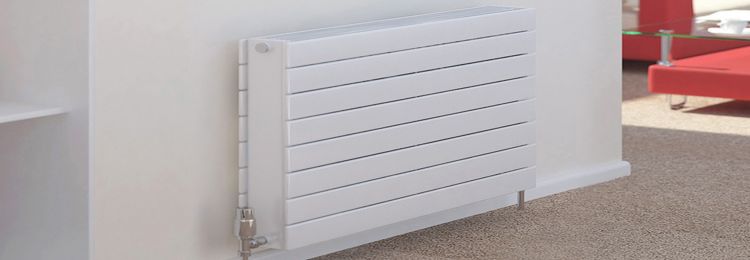
If wall space is limited, a double panel radiator can provide a higher heat output without taking up much more width. Modern flat panel radiators such as the Ignis Core range are available in both horizontal and vertical designs, making it easier to find a suitable option for both compact and larger spaces.
3. Understand Radiator Types
Radiator type affects both heat output and depth. Common radiator types include:
- Type 10: single panel with no convector fins
- Type 11: single panel with one set of convector fins
- Type 21: double panel with one set of convector fins
- Type 22: double panel with two sets of convector fins
As a general rule, double panel radiators provide more heat output than single panel models, making them useful for larger rooms or spaces with higher heat demand.
4. Consider Radiator Placement
Where you position your radiator can affect how efficiently it heats the room. Traditionally, radiators are placed under windows to help counteract cold air, although modern layouts provide greater flexibility.
For best performance:
- Avoid placing large furniture directly in front of the radiator
- Allow enough surrounding space for air circulation
- Consider how the room is used day-to-day
Vertical radiators can also help maximise usable wall space in smaller rooms or contemporary interiors.
5. Think About Style and Finish
Modern radiators are available in a wide range of styles, colours, and finishes, so they can become part of the room design rather than just a functional item.
Popular options include:
- White radiators: clean, classic, and versatile
- Anthracite or black radiators: bold, contemporary, and ideal for modern interiors
- Flat panel radiators: sleek and minimal for a designer look
- Vertical radiators: ideal for saving wall space
Choosing a finish that complements your interior can help create a more cohesive and modern living space.
6. Check System Compatibility
Before purchasing a radiator, ensure it is compatible with your heating system and installation requirements.
Key things to check include:
- - Pipe centres and connection size
- - Valve compatibility
- - Wall construction and fixing requirements
- - System temperature, particularly for low temperature systems such as heat pumps
For installers and larger projects, it is also important to consider flow temperatures, water content, operating pressure, and system balancing requirements.
7. Consider Efficiency and Controls
Choosing the right radiator can help improve comfort and efficiency, particularly when paired with suitable controls such as thermostatic radiator valves or smart heating controls.
Radiators can also work effectively alongside underfloor heating. Underfloor heating provides steady background warmth, while radiators offer faster, responsive heat when needed, helping create a more balanced and flexible heating system.
Final Thoughts
The right radiator should deliver the heat output your room requires, suit the available space, and complement your interior style. By considering heat output, radiator size, type, placement, and system compatibility, you can choose a radiator that performs well and looks great in your home.
Explore our range of modern radiators on Underfloor Store to find the perfect solution for your space.